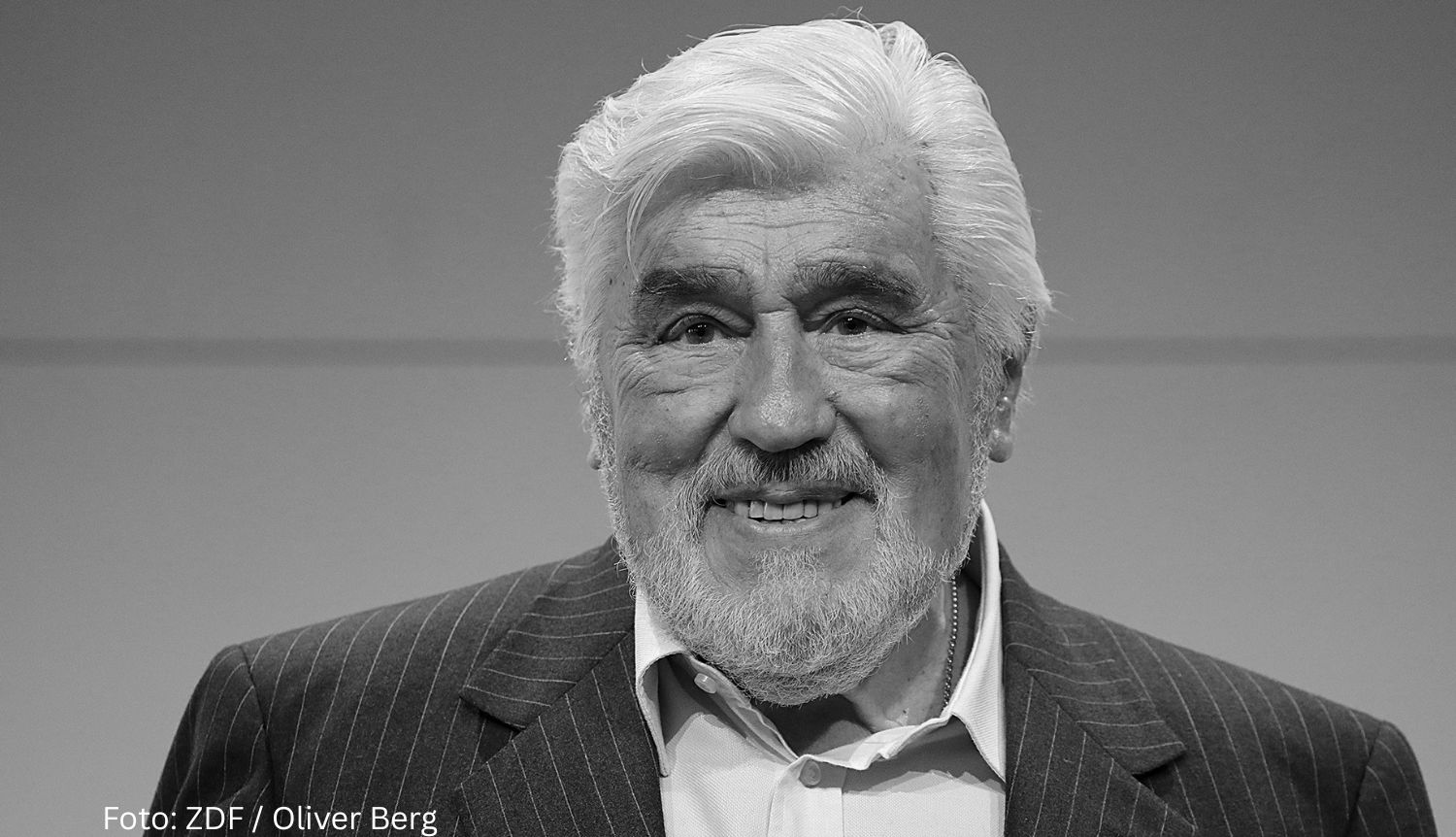
Remembering Mario Adorf: A Titan of German Cinema and His Enduring Legacy
The global film community, and especially Germany, mourned the loss of a true cinematic titan on Thursday, April 9, 2026. Mario Adorf, the revered actor whose career spanned nearly seven decades and over 200 productions, passed away in Paris at the age of 95, just one day prior. His death sent shockwaves across the cultural landscape, prompting an immediate and heartfelt response from broadcasters determined to honor his immeasurable contribution to film and television. This profound sense of loss, coupled with the desire to celebrate his artistry, swiftly led to a significant Programmänderung Zum Tod Von Mario Adorf across Germany's public television channels, ensuring that audiences could revisit the remarkable work of this international star.
Adorf was more than just an actor; he was a phenomenon. Known for his captivating presence, distinctive voice, and unparalleled versatility, he effortlessly transitioned between roles as a charming rogue, a menacing villain, a sympathetic character, and everything in between. From gritty dramas to lighthearted comedies, cult classics to Oscar-winning masterpieces, Adorf left an indelible mark on every project he touched. His legacy is not merely a collection of films but a testament to a career dedicated to the craft, establishing him as one of the few German actors to achieve true global renown.
A Career of Unrivaled Versatility and Global Acclaim
Born in Zurich, Switzerland, in 1930, to a German mother and an Italian father, Mario Adorf’s career began in the mid-1950s, quickly establishing him as a compelling force on screen. His breakthrough came in 1957 with Robert Siodmak's intense drama Nachts, wenn der Teufel kam (Nights When the Devil Came). In this film, Adorf delivered a chilling performance as Bruno Lüdke, a mentally challenged man suspected of murder, earning critical acclaim and a nomination for the Best Foreign Language Film Oscar for the film itself. This role immediately showcased his raw talent and ability to inhabit complex, often morally ambiguous characters.
What followed was a career marked by an astonishing range. Adorf frequently ventured beyond German borders, starring in numerous international productions that cemented his status as a "world actor." He worked with legendary directors and shared the screen with global stars, bringing his unique intensity and charisma to diverse cinematic landscapes. He was equally at home portraying a cunning bandit in spaghetti westerns like Deadlock, a tormented soul in European art house films, or a patriarchal figure in sprawling German television epics. This ability to adapt and excel in various genres and languages made him a truly exceptional figure in an industry often bound by national borders.
His distinctive gravelly voice and expressive face became his trademarks, allowing him to convey layers of emotion with minimal effort. Whether he was embodying pure evil or profound sadness, Adorf’s performances were always authentic and deeply felt, leaving a lasting impression on audiences worldwide.
Honoring a Legend: The Immediate TV Tributes and Program Changes
In a heartfelt and swift response to the news of his passing, German public broadcasters announced a widespread Programmänderung Zum Tod Von Mario Adorf (program change in tribute to Mario Adorf's passing). This collective effort ensured that viewers across the nation could pay their respects and rediscover the depth of his work.
ARD's Homage to a Character Actor
The ARD network was quick to respond, immediately airing a documentary about Adorf on the day his death was announced. Further tributes continued over the weekend:
- On Saturday, the TV film Einmal Sohn, immer Sohn (Once a Son, Always a Son) from 2018 was broadcast, featuring Adorf in a memorable supporting role alongside Christiane Hörbiger and Sebastian Bezzel.
- The ARD Mediathek made several of his seminal works available on demand, including the Oscar-winning masterpiece Die Blechtrommel (The Tin Drum), in which Adorf delivered an unforgettable performance. Also available were the films Altersglühen (Glow of Age) and Der Liebling des Himmels (Heaven's Darling).
- Fans of cult television could revisit Helmut Dietl's iconic series Kir Royal. Although Adorf appeared only in the first episode, his legendary line, "Ich scheiß dich so was von zu mit meinem Geld!" ("I'll absolutely shower you with my money!"), instantly became a part of German TV history.
ZDF's Spotlight on a German Film Legend
ZDF also joined the national tribute, offering a curated selection of films and a dedicated documentary:
- In the early hours of Saturday morning, ZDF aired the documentary Mario Adorf - eine deutsche Filmlegende (Mario Adorf - A German Film Legend), a fitting tribute to his illustrious career.
- On Saturday afternoon, the TV comedy Krokodil (Crocodile) from 2013 was shown, featuring Adorf as a grumpy old man – a role that perfectly showcased his ability to bring nuance to even seemingly simple characters.
- The ZDF Mediathek provided access to some of his most significant works, including the first installment of the beloved Karl May adaptation Winnetou, where Adorf chillingly portrayed the villain Santer. Also available were the perennial Christmas classic Der kleine Lord (The Little Lord) and the adventurous 1959 film Das Totenschiff (The Death Ship).
Regional Channels and Streaming Opportunities
The third programs within the ARD network also paid their respects:
- NDR, in the night from Friday to Saturday, aired a special broadcast titled In Erinnerung an Mario Adorf (In Memory of Mario Adorf), a compilation of his engaging appearances on various NDR talk shows.
- RBB featured the two-part series Der letzte Patriarch (The Last Patriarch) on Saturday evening.
- BR broadcast Rossini - Oder die mörderische Frage, wer mit wem schlief (Rossini - Or the Murderous Question of Who Slept With Whom), another work by Kir Royal creator Helmut Dietl.
For a comprehensive look at how Germany honored him and for more details on the broadcasts, you can read our related article: Germany Honors Mario Adorf: TV Program Changes & Tributes.
Must-Watch Classics: A Curated List for Streaming and On-Demand
Beyond the linear television schedules, Adorf’s extensive filmography is readily available across various streaming platforms and video-on-demand (VoD) services, allowing audiences to discover or revisit his extraordinary talent at their leisure. Here are some indispensable titles:
Nachts, wenn der Teufel kam (Nights When the Devil Came, 1957)
Significance: This intense post-war drama marked Adorf's cinematic breakthrough. His portrayal of Bruno Lüdke, a serial killer suspect, is unsettling and powerful, showcasing his ability to embody complex psychological states. Directed by Hollywood veteran Robert Siodmak, the film was also nominated for an Academy Award for Best Foreign Language Film.
Where to Watch: Available for rent on various VoD portals, including YouTube for a modest fee.
Die Blechtrommel (The Tin Drum, 1979)
Significance: Volker Schlöndorff's adaptation of Günter Grass's iconic novel won the Palme d'Or at Cannes and the Academy Award for Best Foreign Language Film. Adorf plays the complex and often brutal role of Alfred Matzerath, the stepfather of the protagonist Oskar. His performance is a cornerstone of this cinematic masterpiece.
Where to Watch: Streamable in the ARD Mediathek.
Winnetou (Part 1) (1963)
Significance: Adorf’s portrayal of the ruthless villain Santer in this beloved Karl May Western captivated a generation. He brought a memorable menace to the role, etching Santer into the annals of German cinematic villainy. His performance showcased his ability to command attention, even when playing the antagonist.
Where to Watch: Available in the ZDF Mediathek.
Kir Royal (1986)
Significance: A biting satire of Munich's high society by Helmut Dietl, this cult TV series features Adorf in a brief but unforgettable appearance in the first episode. His character delivers a line that has become one of German television's most famous quotes, a testament to his impactful presence.
Where to Watch: Streamable in the ARD Mediathek.
Deadlock (1970)
Significance: This cult German spaghetti western, directed by Roland Klick, features Adorf in a compelling role. His grizzled, world-weary persona is perfectly suited to the genre, making it a must-see for fans of European Westerns.
Where to Watch: Available for rent on platforms like Amazon.
Lola (1981)
Significance: Adorf's sole collaboration with the groundbreaking director Rainer Werner Fassbinder. In this visually stunning and politically charged film, Adorf delivers a nuanced performance that is both powerful and poignant, reflecting Fassbinder's unique aesthetic.
Where to Watch: Available for rent on platforms like Amazon.
Der kleine Lord (The Little Lord, 1962)
Significance: A heartwarming adaptation of the classic novel, this film became a staple of Christmas television in Germany. Adorf's performance, though not the central role, adds a layer of depth to this beloved family classic.
Where to Watch: Available in the ZDF Mediathek.
For more detailed information on where to find and stream his extensive works, be sure to check out our dedicated guide: Mario Adorf: Stream His Iconic Films & Series Online.
Adorf's Enduring Legacy: More Than Just Roles
Mario Adorf's legacy extends far beyond the impressive list of films and television shows he graced. He was an artist who embodied the turbulent history of 20th-century Germany and Europe, reflecting its complexities, its resilience, and its capacity for both darkness and light. His ability to move effortlessly between languages and cultures made him a bridge between different cinematic traditions, earning him admiration from directors and audiences worldwide.
He was a master of his craft, known for his meticulous preparation and his deep understanding of character psychology. Whether he was playing a charming rogue or a terrifying villain, Adorf always infused his roles with a profound sense of humanity, making even his most despicable characters strangely compelling. His distinctive voice, robust physicality, and magnetic screen presence were instantly recognizable and deeply impactful.
Adorf was also a man of great intellect and wit, often sharing insights into his craft and the broader world of cinema. His contributions helped elevate German cinema on the international stage, demonstrating that German actors could hold their own against the best in the world. He remained active well into his nineties, a testament to his passion for acting and his commitment to his art.
Conclusion
The passing of Mario Adorf marks the end of an era for German cinema. His death, met with immediate program changes and heartfelt tributes, underscores his profound impact on the cultural fabric of the nation. He was a versatile actor, an international star, and a compelling storyteller whose presence on screen was always a guarantee of quality and depth. While the German film landscape has lost one of its most significant and versatile figures, Mario Adorf’s legacy lives on through his vast and varied body of work. We encourage you to explore his films and experience the magic of a true acting legend, a man who truly understood the power of performance. His contributions will continue to inspire generations of actors and filmmakers, ensuring that the name Mario Adorf will forever resonate in the halls of cinematic history.